Passive sensing
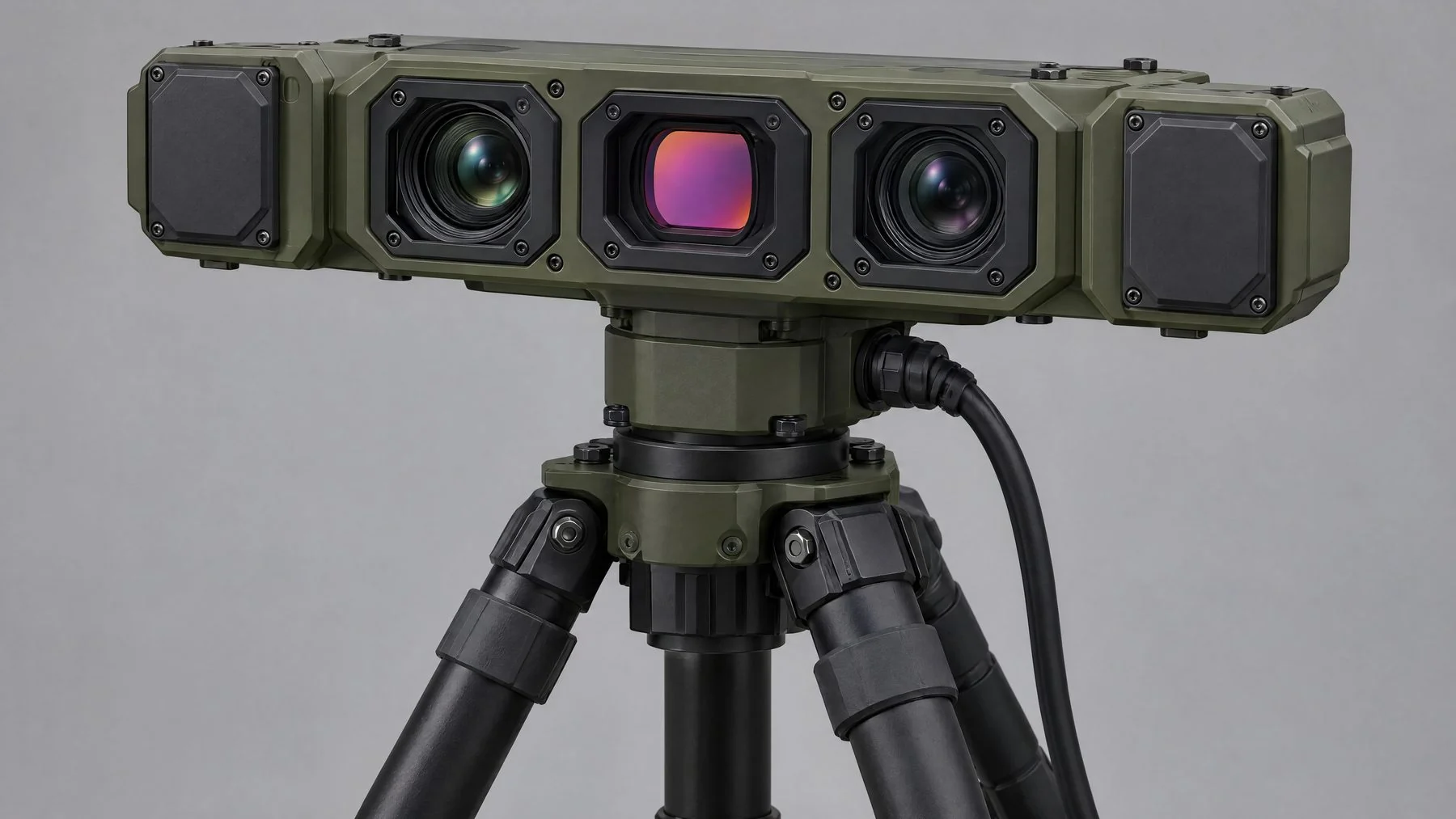
Optical, thermal, and acoustic observations are intended to support detection beyond radio emissions. Receive-only RF sensing adds context where a signal is present.
PERIMETER AWARENESS / PASSIVE SENSING
Passive drone detection for site perimeters.
DESIGN DEVELOPMENT
A passive observation layer for site perimeters, designed to combine several sensing methods and preserve the reports behind an operator’s airspace picture.
Design focus
Optical, thermal, and acoustic observations are intended to support detection beyond radio emissions. Receive-only RF sensing adds context where a signal is present.
The design keeps observations associated with their originating node and timing context, so the basis for a reported detection can be reviewed.
Signed reports are intended to support site awareness and later offline review. The product scope is detection and reporting; response decisions remain with the authorized operator.
Intended applications
Explore passive airspace observation around infrastructure and installation perimeters, with coverage defined for the site.
Evaluate observations of drones whose radios are inactive, using optical, thermal, and acoustic inputs within an agreed test scope.
Examine retained source reports alongside the operating conditions, sensor coverage, and decisions recorded during the event.
WITHIN N.3.X.U.S OS
SENTINEL-1 adds passive detection to the N.3.X.U.S OS product line. Planned interfaces support sharing observations and their source records with participating systems. Integration scope and operator responsibilities are agreed for each evaluation.
Explore N.3.X.U.S OSExplore PNT-1The design uses passive sensors and receive-only RF sensing. SENTINEL-1 is a detection and reporting product, with no transmitter or jamming function.
Radio-silent detection is an intended use of the optical, thermal, and acoustic sensing design. Performance must be established for the target, background, weather, and site conditions during evaluation.
SENTINEL-1 remains in design development. Contact SSX360 to discuss site requirements, research collaboration, and future evaluation arrangements. Integrated performance and hardware signing remain validation work.
TECHNICAL BRIEFINGS
Start with the application, operating environment, and records your reviewers need. Configuration, evaluation scope, and information-sharing arrangements are agreed directly.