Navigation observations
The design keeps the reported position and time alongside receiver integrity indicators, so a reviewer can see what the unit reported and how it assessed the reference.

SIGNET / POSITIONING, NAVIGATION & TIMING
Position and time, with a record to review.
DESIGN DEVELOPMENT
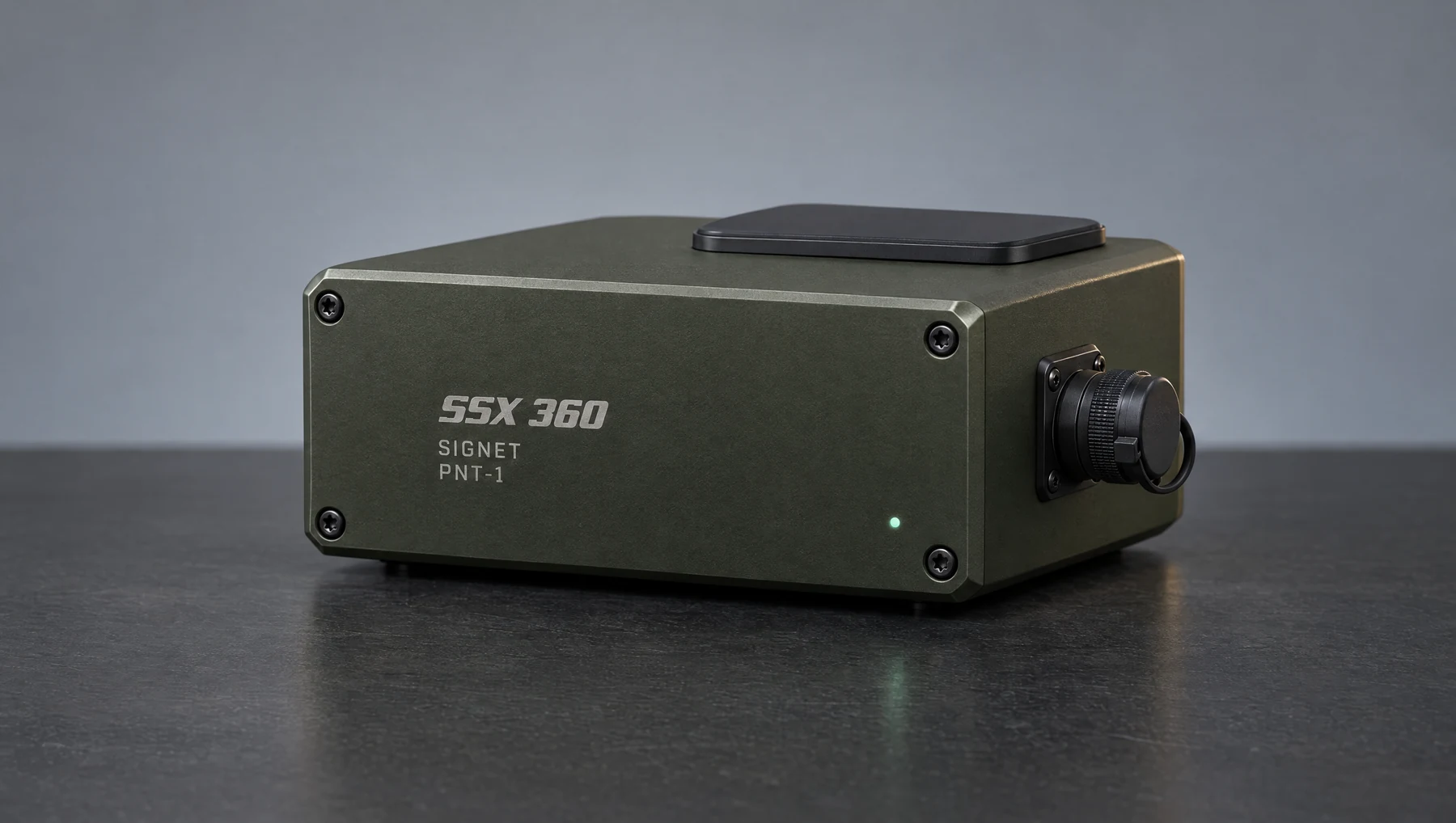
Keep position, time, and the receiver’s reported confidence together. PNT-1 is designed to preserve that context for review when satellite navigation is disrupted or questioned.
Design focus
The design keeps the reported position and time alongside receiver integrity indicators, so a reviewer can see what the unit reported and how it assessed the reference.
Local timing is intended to carry the record through satellite-reference interruptions, with uncertainty and changes in operating state retained for review.
Signed records are designed to support checks of retained position and timing data. Post-quantum signing and independent offline verification are part of the development plan.
Intended applications
Retain navigation and timing context for later review in environments where satellite signals may be interrupted.
Compare recorded observations, trust indicators, and timing behavior against an agreed independent reference.
Explore evidence requirements for utility and communications systems that need to review the timing of an event.
WITHIN N.3.X.U.S OS
PNT-1 adds positioning and timing context to the N.3.X.U.S OS product line. Integration planning covers how participating systems receive those records and how reviewers interpret their trust indicators.
Explore N.3.X.U.S OSExplore SENTINEL-1PNT-1 is in design development. Contact SSX360 to discuss the application, integration requirements, and future evaluation scope. Shipping dates and validated performance specifications are not announced.
The design calls for local timing continuity and records that retain the change in reference status. Holdover performance, uncertainty, and recovery behavior must be established by testing.
A signature supports checking record integrity against an expected key. Position accuracy and trust in the navigation source require their own assessment. PNT-1 is designed to retain that distinction in the review record.
TECHNICAL BRIEFINGS
Start with the application, operating environment, and records your reviewers need. Configuration, evaluation scope, and information-sharing arrangements are agreed directly.