Single-photon detection.
A Single-Photon Avalanche Diode (SPAD) registers individual photon events. The evaluation considers the detector response together with background counts and the conditions of collection.
RADAR & PHOTONIC SENSING / SSX360
God-Knox is SSX360’s photon-counting sensing line. Its evaluation configuration combines single-photon detection, time-correlated measurement, and a reference channel. Each dataset is reviewed with its instrument settings and measurement conditions.
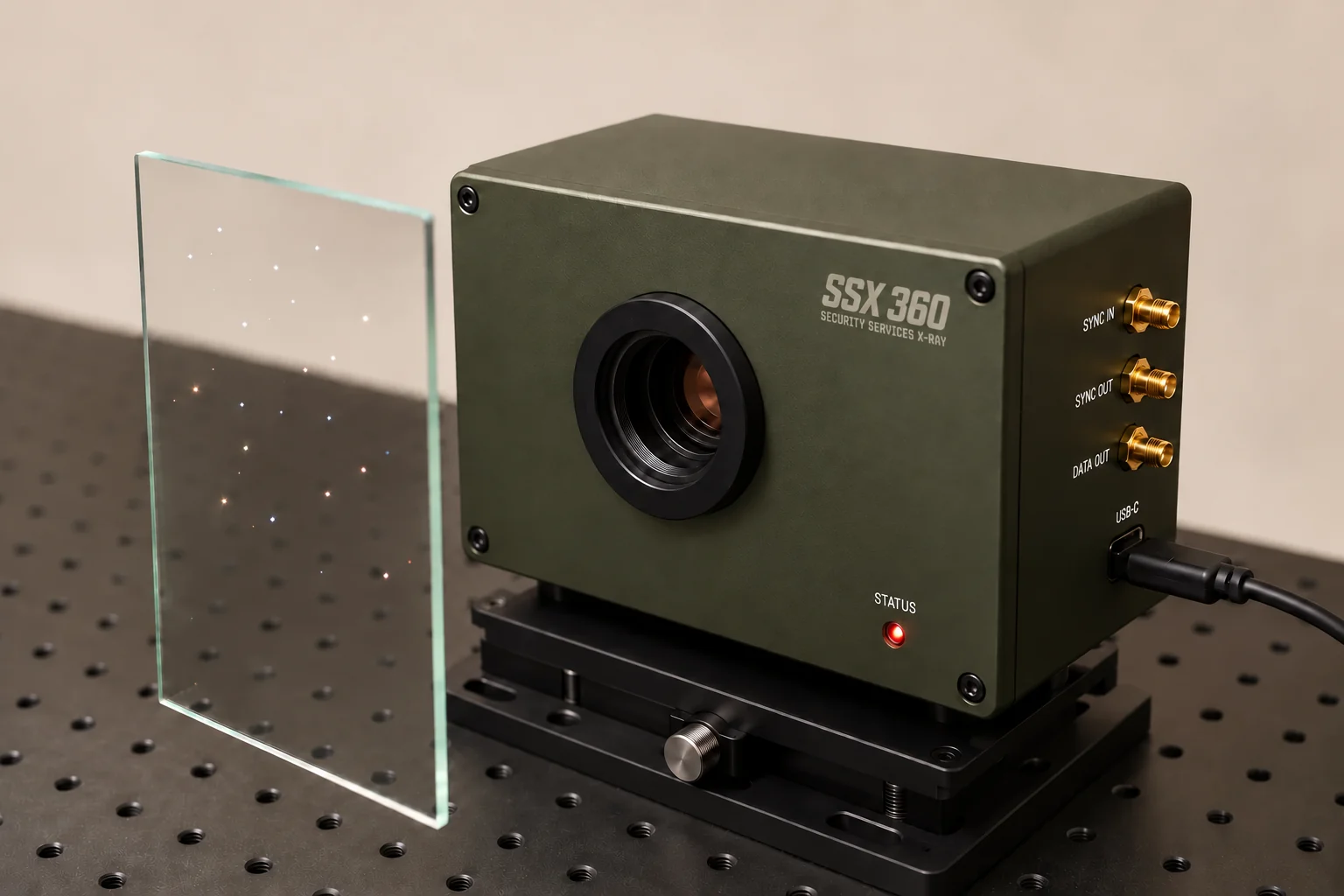
GOD-KNOX / MEASUREMENT CONFIGURATION
Three elements define the evaluation configuration. Each is reviewed against the optical signal, measurement question, and operating conditions.
A Single-Photon Avalanche Diode (SPAD) registers individual photon events. The evaluation considers the detector response together with background counts and the conditions of collection.
Time-Correlated Single-Photon Counting (TCSPC) measures detected events relative to a reference signal. Event timing can be organized into an arrival-time distribution for review.
The reference channel establishes the timing context for the measurement. The record identifies the source, instrument settings, and configuration used to collect the data.
FROM MEASUREMENT TO REVIEW
Define the measurement question, collect the dataset, and document the result. Keep the instrument settings and collection conditions with the data at every stage.
Establish the optical signal, measurement question, and operating conditions. Agree the instrument requirements and the evidence needed to answer the question.
Record photon events or arrival-time histograms with instrument settings, calibration state, and collection conditions. Identify the configuration that produced the dataset.
Document the method, observations, uncertainties, and measurement limits. Relevant checks address detector background, timing variation, and count-rate effects.
An agreed evaluation can preserve measurement records alongside instrument settings and collection conditions. SSX360’s internal evidence tools support organizing imported records, signing the review material, and comparing it with retained sources.
Explore the evidence engagementTECHNICAL BRIEFINGS
Describe the signal you need to measure, the operating conditions, and the question the dataset should answer.
FOR YOUR FIRST CONVERSATION